Montenegro, a small country on the southern Adriatic coast, is known for its rugged mountains, its beautiful coastline and the towering size of its people. It is also increasingly gaining a reputation for the quality of its wines.
While Montenegro produces wines from a wide array of grapes, including well-known varietals such as Cabernet Sauvignon, Merlot and Chardonnay, its most notable grape is a local variety, Vranac (pronounced Vranats). Vranac likely originated in Montenegro, although it is grown in larger quantities in North Macedonia, where it is known as Vranec, with an ‘e’, and in smaller amounts elsewhere in the Balkans. It is closely related to the Zinfandel/Primitivo grape, known locally as Kratošija (pronounced Kratoshia).
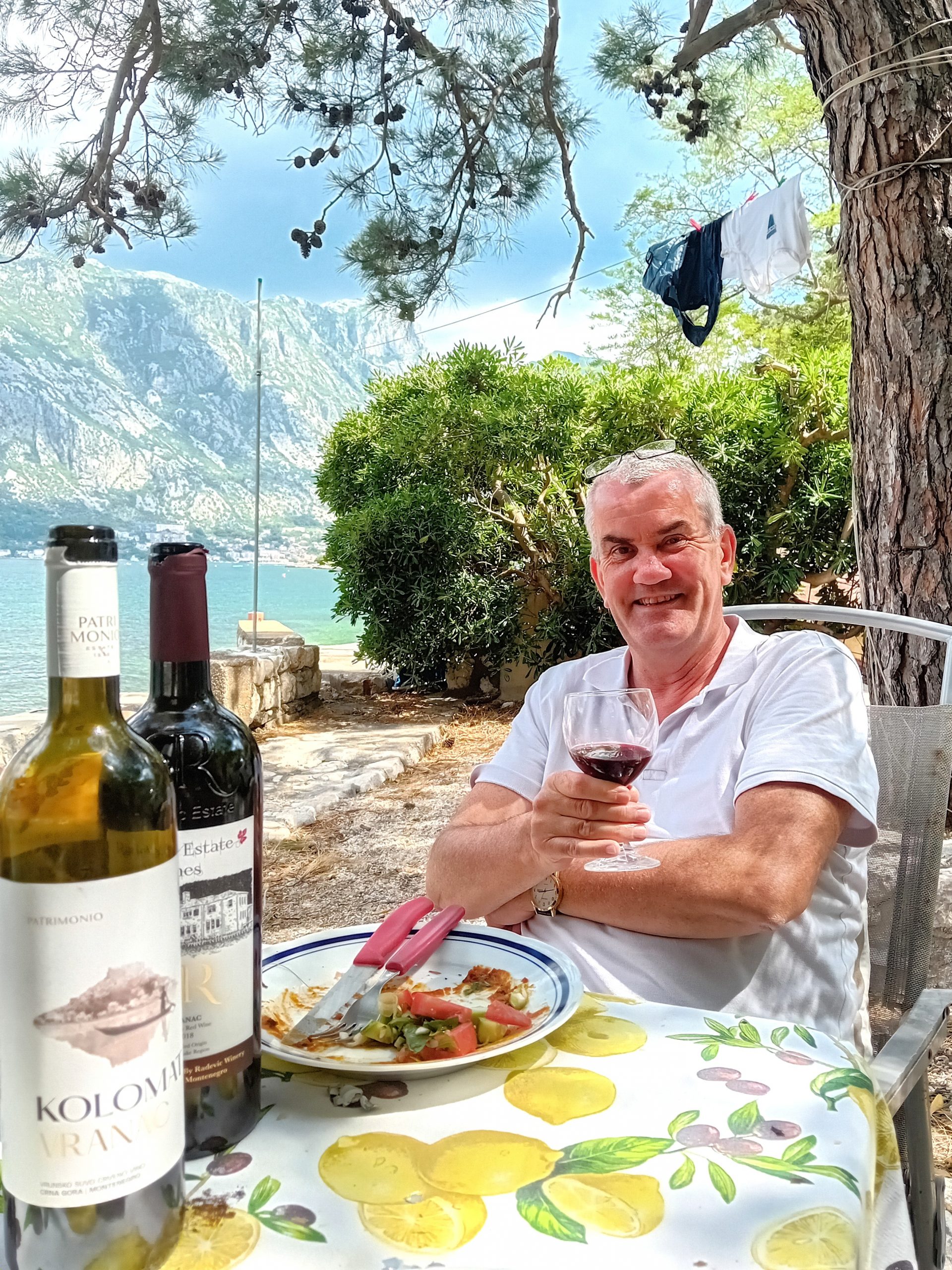
Patrimonio and Radevic Vranac by the Bay of Kotor
I have been a frequent visitor to Montenegro for more than 30 years, and lived there for a time in the early 2000s. I have long believed in the potential of Vranac. Most of the country’s wine production is by the communist-era Plantaže company, which is still state-owned. Its huge vineyard produces a frankly uninspiring low-cost Vranac (among other grape varieties) which is best avoided. That goes for the supposedly premium “Pro Corde” wine as well. At the higher-level, Plantaže do produce some very creditable premium wines, such as the Vranac Reserve. But I cannot help thinking that this large company has a suffocating influence on Montenegro’s quite small wine production.
It is the small, private producers that have been blossoming in the past couple of decades which provide the real interest in Montenegrin winemaking. Until quite recently, many small winemakers were only producing for themselves and their families, in often tiny quantities. Some of them were making remarkably good wines.
The experiences of drinking the excellent homemade wine produced by the father of a friend at Spuž, not far from the capital, Podgorica, accompanied by excellent fresh local produce, Montenegrin pršut (prosciutto), and homemade lozovača (grappa), in the company of wonderful friends, were truly memorable. As was the rakija party organised by another friend, where we danced around the bubbling still while downing the new loza and the new wine. Probably not a very safe escapade in our inebriated state.
Nowadays, many are producing wine commercially, although often in very small quantities, making it a challenge to get one’s hands on them. I managed to get hold of wines by some of the larger producers (larger by Montenegrin standards, but still not very large).
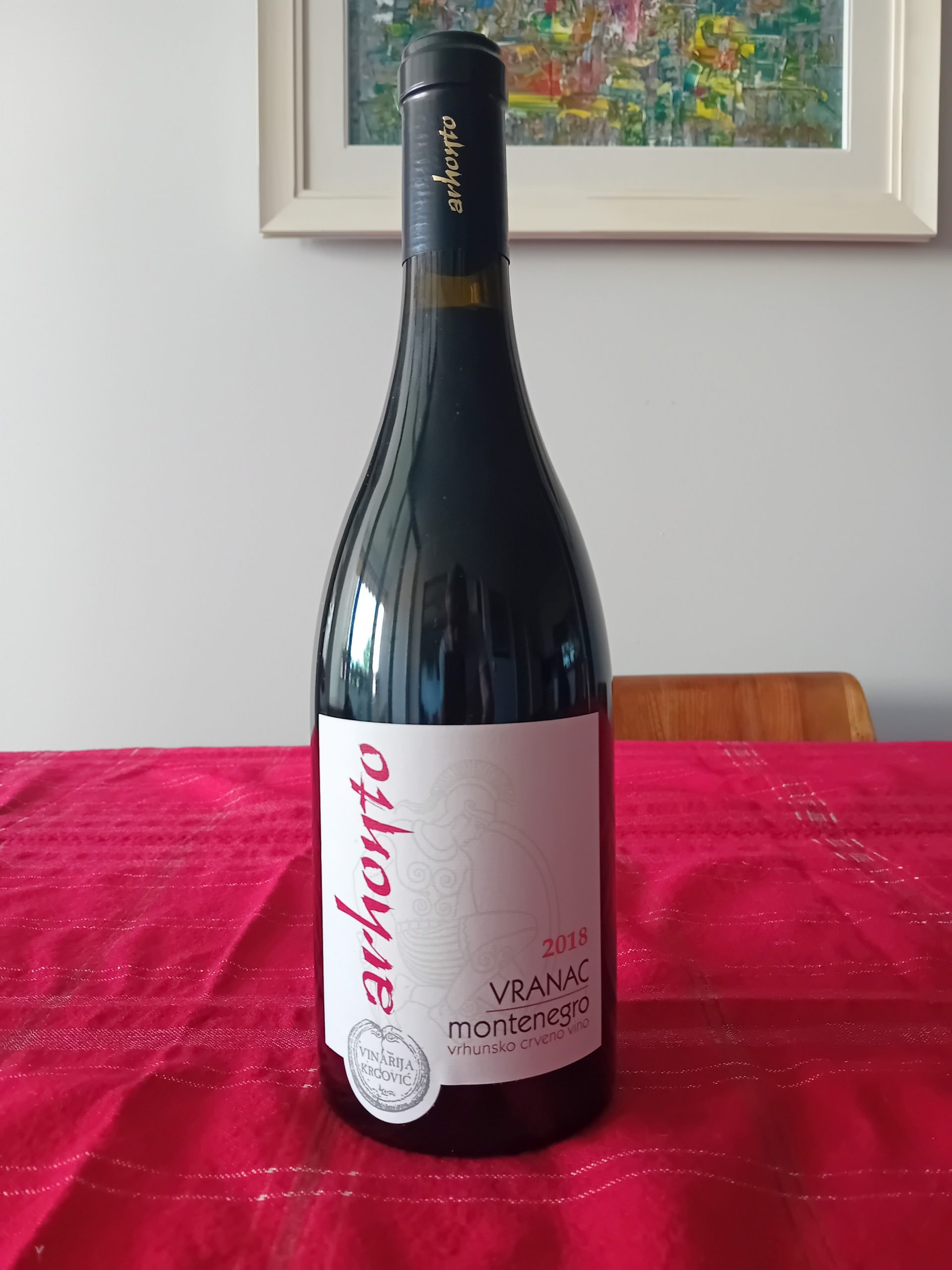
Vranac from Krgovic
The Arhonto Vranac was a big bundle of fruit, but the high alcohol level was not to my taste. All the wines I tried during this visit were on the alcoholic side, between 14½ and 15 percent according to the labels. I was more troubled by this with the Arhonto Vranac than with the other wines. Despite the plentiful fruit, I found this wine rather blousy and unfocused.
Not far from the Krgović estate is the Radević winery. I tried their premium Vranac from 2018, one of several varietals produced at the estate. This was a big, richly flavoured wine, with spicy dark fruits and well-integrated oak.
An area which seems to be particularly blessed for winemaking is the Crmnica (pronounced something like Tsermnitsa) region close to Virpazar, a small town on the Skadar (Shkodër in Albanian) Lake, which straddles the Montenegrin-Albanian border. Surrounded by mountains, with a profusion of waterlilies and birdlife, Lake Skadar is one of the most beautiful places I have been to. The wines of the area can also be startlingly lovely.
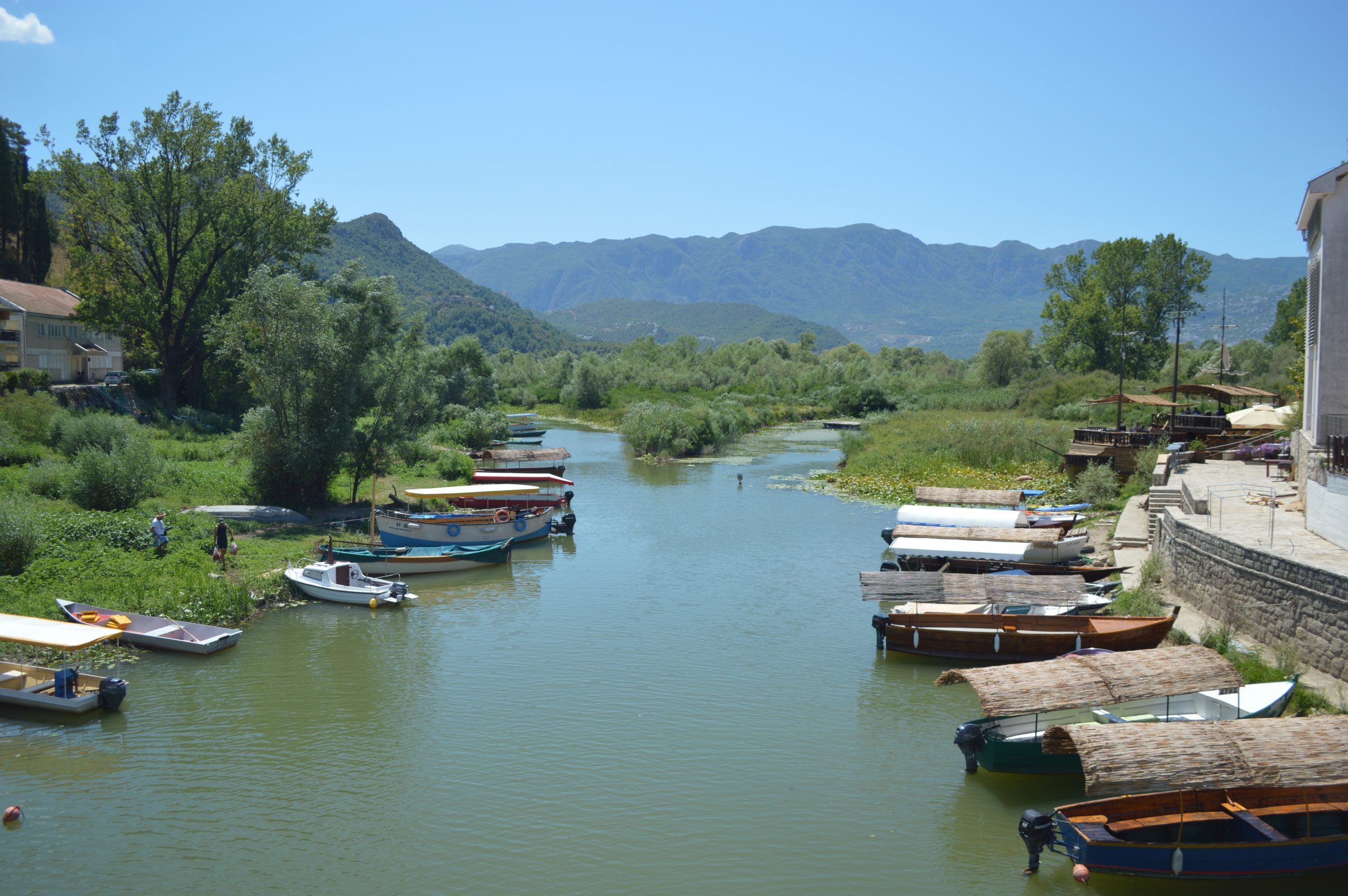
Virpazar and Skadar Lake
Many of the producers of the Crmnica area are really very small indeed, and sadly not easy to find. I was lucky enough to pick up a bottle of the Kolomat Vranac 2021 from the Patrimonio estate, one of the larger wineries in the area. For me, this was the pick of the bunch. It had all the dark, rich power that one expects from fine Vranac, but there was a freshness and vibrancy about it, a bright acidity, vivacity and elegance which set it apart.
Montenegro’s wine potential is being amply realised by such producers, and Vranac is proving worthy of its place among Europe’s great wine varieties. Given the small production, the best examples are not easy to track down even in Montenegro, let alone elsewhere. But they are definitely worth the effort.


Thank you for this useful article
Good stuff thanks for sharing! Did you try any Kratošija / Zinfandel? I’m interested in how this fares…
Interestingly, Ridge in California has done some test plantings of Puglian clones, which it labels as “Primitivo” rather than “Zinfandel”.
I tried the Kratošija from Krgović (which I mentioned in the article). It was very Zinfandel-like. I think someone who likes Zinfandel would probably like Vranac.