Four of us met at Chelsea stalwart The Medlar for a celebration and exploration of Portuguese wine.
The lunch was friend of Elitistreview RZ’s idea. He has a fondness for Portuguese wine and feels they are underappreciated. He kindly shared some bottles from his cellar to help educate us.
The Medlar, on the Kings Road, is a restaurant of some sentimental significance to me. When I first started getting seriously into wine, in the mid to late 2000s, I attended many grand wine dinners there and learned a great deal.
Much like Nigel Platts-Martin’s restaurants, the premise is that this is a neighbourhood restaurant. The knowing wink is that the food is far better than it should be.
Over the years the quality has waxed and waned. Based on this experience, it is definitely back on form.
It is also worth noting that The Medlar is a sister restaurant to Cornus, which has appeared on these pages several times.
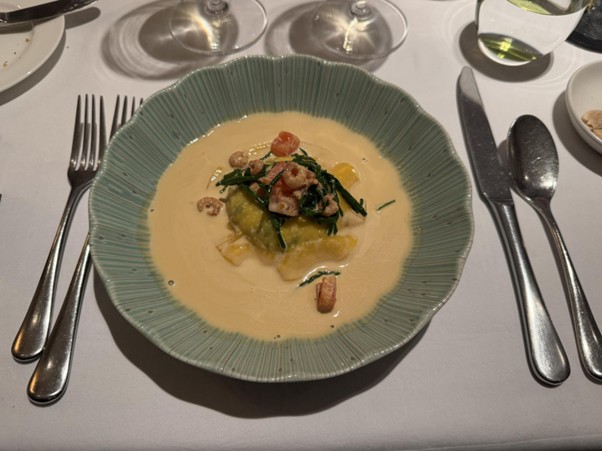
For starters I took the classic crab raviolo. Topped with samphire and shrimps and bathed in a fish velouté, this type of dish is now commonplace in London restaurants. I do not know whether Medlar started the trend, but I first tried it here. It was just as good as I remember. Rich but delicate, it went very well with the whites.
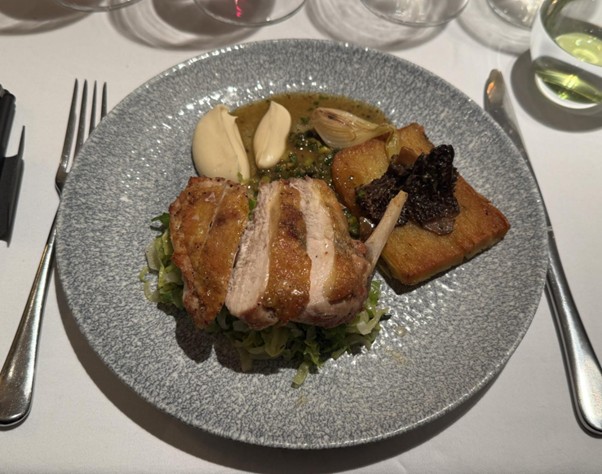
My main was guinea fowl. My immediate thought was: why do we not eat guinea fowl more often? It is as tasty as good French chicken, with no dryness. Served on cabbage with crispy potatoes, it was delicious, hearty and wine friendly.
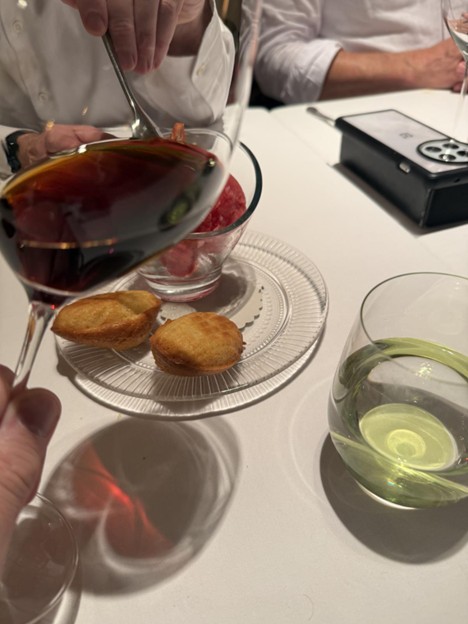
For afters we shared two cheese portions between four. Very good. We finished with madeleines and blood orange sorbet. Who does not love blood orange sorbet?
WHITES
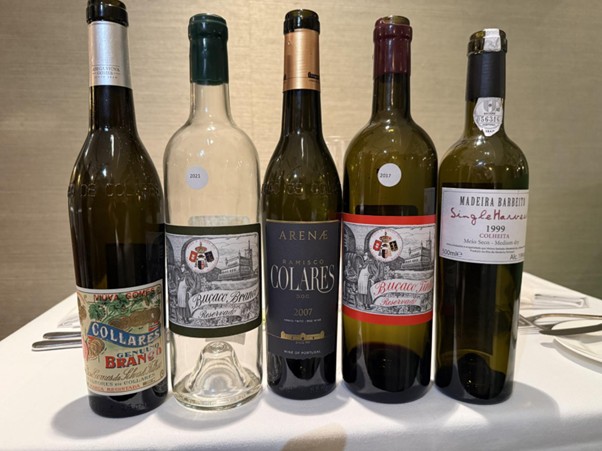
Colares Genuíno Branco 2021, Viúva José Gomes da Silva & Filhos
12.5% abv. 100% Malvasia de Colares. Colares is pretty much due west of Lisbon. It must surely be the westernmost wine-growing region of Europe, jutting out into the Atlantic.
The wines of Colares are grown on ungrafted vines in what they call the “sandy soils” of Colares. They look more like sand dunes with vines growing in them. Barely soil at all.
Served from a 50cl bottle. Evidently there is not a great deal of this to go around, so they sell it in small bottles.
A somewhat ecclesiastical nose. Stepping into a rural high church on a cold spring morning, with just a hint of tangerine following the incense.
A lovely acid core. Intense without being shrill. A waxy, Chenin-like mouthfeel. Both wines improved with food, but out of this and the next wine, this Colares started ahead and maintained its lead.
Buçaco Branco Reservado 2021, Alexandra d’Almeida
13% abv. Made from Encruzado (Dão), Maria Gomes and Bical (Bairrada) grapes. Served in a generous 75cl bottle. The label is very fancy and well designed. The vintage, however, is printed off-centre on a small white sticker. There is something gloriously incongruent about this.
Evidently, back in the day, this wine was only available at the hotels owned by the founder, Senhor d’Almeida. It is somewhat similar to the Colares. A little more oxidative in style, with a little bitterness on the finish.
It is classy, but the élevage is clearly present. More than decent. Then you look at what it sells for, and my goodness, it had better be.
These wines started a discussion around Assyrtiko. There is a similar mid-palate intensity and purity, but these have gentler alcohol and a slightly less aggressive mouthfeel.
REDS
Arenæ Colares Ramisco 2007, Adega Regional de Colares
12.5% abv. 100% Ramisco. Made by the regional cooperative, again served from a 50cl bottle, and again from ungrafted vines growing on sandy soil. Pale colour.
Lovely fruit character on the front and middle palate, with a clean acid at the end. Pinot Noir in weight, with just a hint of rusticity and some substance in the middle to hold everything in place. The finish carries just a hint of sweetness to balance the acidity.
Evidently this is aged in Brazilian oak. Who even knew that was a thing? This sparked a discussion about what constitutes a Southern European wine.
This is poised and precise. Not clumsy. It puts me in mind of a good bottle of Le Soula Rouge in a low alcohol, non-funky year. Once again, the Colares wins my heart as wine of the flight.
Buçaco Reservado 2017, Alexandra d’Almeida
13.5% abv. Made from Touriga Nacional and Baga grapes. Back to full bottle size. The oak is French, not Brazilian.
There was some discussion as to whether it was fair to describe this wine as international in style. I felt it was, but wiser people with better palates than me disagreed.
This is clearly still a young wine. The fine tannins march in close single file. In ten or even twenty years this will tell a very interesting story. There is a hint of dark and stone fruits on the finish, just starting to peer out.
I do not want to damn with faint praise, and I would certainly hope to taste a more mature example at some point. At these prices, however, you could buy three bottles of Lionnet Terre Brûlées Cornas from the same vintage. That would be a treat and a half.
MADEIRA
Madeira Malvasia “Single Harvest” Colheita 1999, Barbeito
At this stage of proceedings, analysis gives way to feelings. My handwritten notes say: “light, youth, subtle, good with cheese.” It is medium dry with some bite at the finish. This is really good. I can see why people obsess over Madeira.
Madeira Tinta Negra Colheita 1999, Justino’s
Ordered by the glass off the list. This is a much darker beast. There is sweetness and depth, but much less sophistication. It worked very well with the madeleines and was a match for the blood orange sorbet.
CONCLUSIONS
Wine is really about the sharing. This lunch was just the tonic. Good friends, good food, good wine and the opportunity to learn and to connect.
The Colares and Buçaco wines were lovely. At around £60–80 per bottle, they are fully priced. Much like a lot of English sparkling wine, they represent good value only if they spark something in your soul. Something beyond the character of the liquid in the glass itself. That is not a criticism. It is merely a reminder that some wines ask more of you than others.


A great lunch, beautifully written up.
I understand Madeira is expensive, but for table wines these seem frighteningly expensive. Do you have a more… direct comment on value, Leon?
I would also be interested in RZ’s point of view on relative value compared to,say, Northern Rhône. One can buy a damn serious Rhône wine for £80+!